WEBP vs AVIF: Which Image Format Is Best for Websites?
WEBP vs AVIF comparison for websites. Learn which image format offers better compression, performance, compatibility, and SEO benefits.
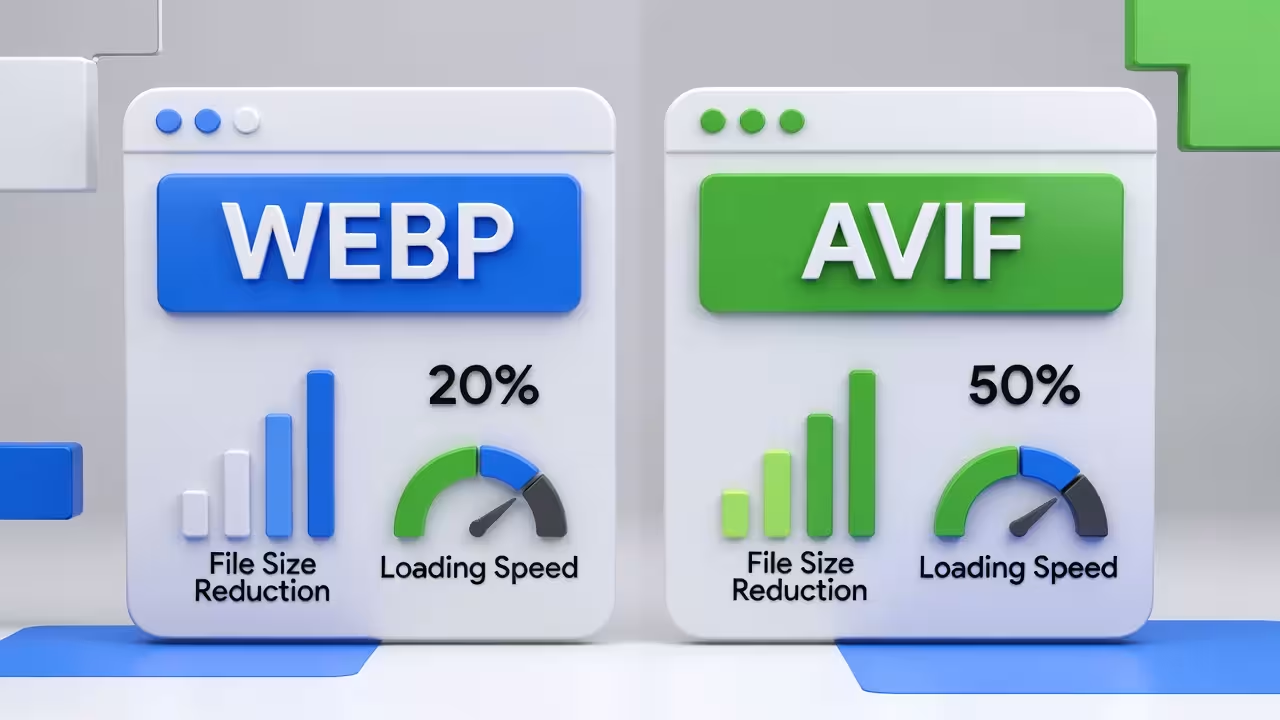
Choosing the right image format is one of the simplest yet most effective ways to improve website speed, user experience, and SEO performance. Images often make up the largest portion of a web page’s total size, so using modern image formats can significantly reduce loading times. Two formats that are widely discussed today are WEBP and AVIF. Both are designed for the modern web, but which one is actually better for websites?
WEBP is an image format developed by Google and has become a popular replacement for traditional JPG and PNG images. One of its biggest strengths is compatibility. WEBP is supported by all major modern browsers, including Chrome, Firefox, Edge, Safari, and most mobile browsers. It supports both lossy and lossless compression, transparency, and animation, making it a flexible choice for many types of websites.
In practice, WEBP images are usually 25–35% smaller than JPG images at similar visual quality. This reduction helps websites load faster, improves Core Web Vitals, and reduces bandwidth usage. Because of its stability and wide browser support, WEBP is often recommended as the safest modern image format for most websites.
AVIF is a newer image format based on the AV1 video codec and is considered the next generation of image compression. Its main advantage is superior compression efficiency. In many cases, AVIF images can be 20–30% smaller than WEBP while maintaining the same or even better visual quality. This makes AVIF an excellent option for performance-focused websites that prioritize speed and SEO.
However, AVIF does have some limitations. While browser support is improving rapidly, it is not yet as universal as WEBP, especially on older devices and browsers. In addition, AVIF encoding requires more processing power, which can result in slower conversion times compared to WEBP.
From an SEO perspective, both WEBP and AVIF are highly beneficial. Google officially recommends using modern image formats to improve page speed. Faster-loading images help reduce Largest Contentful Paint (LCP), improve user engagement, and lower bounce rates—factors that indirectly contribute to better search rankings.
So, which image format is best for websites? If you want maximum compatibility and a proven solution, WEBP is the best default choice. If your goal is maximum compression and cutting-edge performance, AVIF offers the best results—especially when combined with a fallback image format.
For most websites, the smartest approach is to use AVIF where supported and fall back to WEBP for broader compatibility. This strategy delivers the best balance between performance, accessibility, and user experience. Using an online image converter like Pixbiz, you can easily convert and optimize images to both WEBP and AVIF formats without noticeable quality loss.
Pixbiz helps website owners, developers, designers, and content creators optimize images for faster loading and better SEO. By reducing image size while preserving visual quality, you can improve website performance without changing your design or content strategy.
In conclusion, both WEBP and AVIF are excellent modern image formats for websites. WEBP excels in compatibility and reliability, while AVIF leads in compression efficiency and future-proof features. Choosing the right format—or combining both—can give your website a clear advantage in speed, SEO, and overall user experience.