Modern Image Format WEBP, AVIF, HEIC, APNG
Learn about modern image formats WEBP, AVIF, HEIC, and APNG. Compare features, compression, use cases, and SEO benefits for websites.
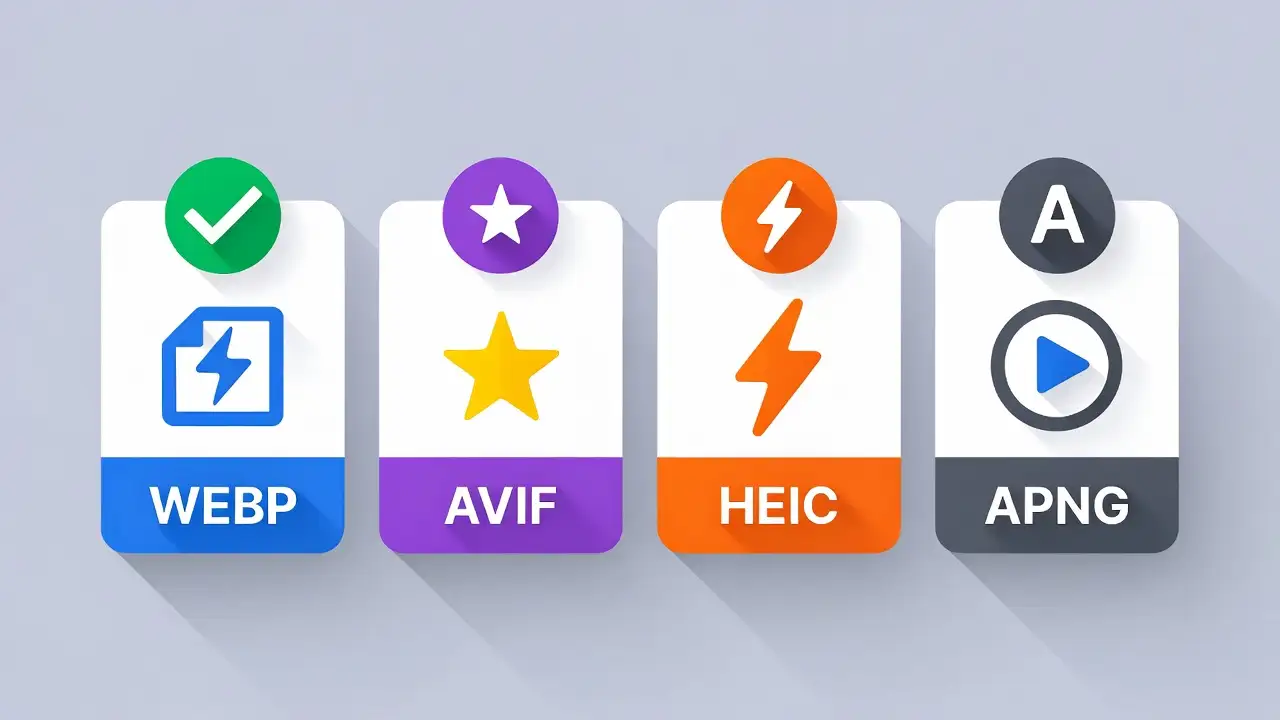
Modern websites demand fast loading times, high visual quality, and efficient data usage. One of the most effective ways to achieve these goals is by using modern image formats. Formats like WEBP, AVIF, HEIC, and APNG are designed to replace older standards such as JPG, PNG, and GIF. Each of these formats offers unique advantages depending on your use case, platform, and performance goals.
WEBP is currently the most widely adopted modern image format on the web. Developed by Google, WEBP supports both lossy and lossless compression, transparency, and animation. Compared to JPG and PNG, WEBP images are significantly smaller while maintaining similar visual quality. Thanks to its excellent browser compatibility, WEBP has become the default choice for many websites focused on speed and SEO.
AVIF is considered the next generation of image formats. Based on the AV1 codec, AVIF offers superior compression efficiency compared to WEBP. In many cases, AVIF images are 20–30% smaller than WEBP at the same quality level. This makes AVIF ideal for performance-critical websites aiming for top Core Web Vitals scores. However, AVIF encoding is more resource-intensive and browser support, while growing fast, is not yet as universal as WEBP.
HEIC (High Efficiency Image Container) is commonly associated with Apple devices. It is widely used on iPhones and iPads due to its excellent compression and high image quality. While HEIC is very efficient for storage and photography, its web compatibility is still limited. For websites, HEIC images usually need to be converted into WEBP or AVIF before publishing to ensure cross-browser support.
APNG (Animated PNG) is an extension of the PNG format that supports animation. Unlike GIF, APNG provides better color depth, transparency, and overall image quality. APNG is a great option for simple animations where quality matters more than file size. However, animated WEBP often produces smaller file sizes, making it a more efficient alternative in many cases.
From an SEO perspective, modern image formats play a key role in improving website performance. Smaller images load faster, reduce Largest Contentful Paint (LCP), and enhance user experience. Search engines favor fast-loading pages, which means image optimization can indirectly help improve search rankings.
Choosing the right image format depends on your priorities. WEBP offers the best balance between compatibility and performance. AVIF delivers the best compression and future-proof features. HEIC works best for Apple ecosystems but requires conversion for the web. APNG is useful for high-quality animations when file size is not the top concern.
For most websites, the best approach is to use AVIF as the primary format with WEBP as a fallback. Using an online image converter like Pixbiz, you can easily convert images into WEBP, AVIF, or other formats while reducing file size without noticeable quality loss.
Pixbiz helps website owners, developers, designers, and content creators optimize images for faster loading and better SEO. By using modern image formats correctly, you can significantly improve website performance without compromising visual quality.
In summary, WEBP, AVIF, HEIC, and APNG represent the future of digital images. Understanding their strengths and limitations allows you to choose the best format for your website and deliver a faster, smoother experience for your users.